
Reviewed · WALLED CITY & OLD TOWN WALKS
Private 4-hour walking tour of Cartagena with official tour guide
Cartagena rewards slow walking.
A private official guide turns a half-day stroll into a real story—Roman theaters, Punic walls, and viewpoints—without the usual group herding. I especially like the included Roman Theater Museum entrance and the way the private format lets your guide pace the day for your questions and your legs.
The only catch: it’s still a walking tour, and a couple stops involve stairs and elevated viewpoints, so plan for some uphill shoe time. If that’s an issue, ask your guide to adjust the pace early—they’ve shown they can.
Here’s what you can expect from this 4-hour private Cartagena highlights walk, priced at $260.07 per person, with morning or afternoon departures.
In This Review
- Key highlights worth planning around
- How a private 4-hour walk makes Cartagena click
- Value and what the price really covers in your day
- Meeting point comfort: hotel pickup and a real start to the route
- Stop 1: Museo Naval—Cartagena through ships, science, and voyages
- Stop 2: Castillo de la Concepción—panoramas with Roman and Arab layers
- Stop 3: Teatro Romano de Cartagena—an included ticket worth prioritizing
- Consistorial Palace and the old city rhythm—modernist style in the mix
- Stop 4: Cerro del Molinete—Roman forum traces near today’s streets
- Stop 5: Punic Wall and the Punic Wars story in stone
- What makes the guiding style matter: David, George, Rosel, and Gema
- Logistics you should plan for: walking pace, tickets, and comfort
- Who this tour is best for
- Should you book this Cartagena private walking tour?
- FAQ
- Is this tour private?
- How long is the tour?
- What language is the tour offered in?
- Where does the tour start?
- Does the tour include entrance fees?
- Are there different departure times?
- Are tickets included for every stop?
- Is food and drink included?
- Will I receive a confirmation after booking?
- Can I cancel for a refund?
Key highlights worth planning around
- Private, official guide for your full 4-hour window so you can ask follow-ups and get practical context as you go
- Roman Theater and Museum entry included, a major time-saver and the most expensive ticket on the route
- Morning or afternoon departure so you can match the tour to your day and heat tolerance
- Free stops that help your budget, including Museo Naval and Cerro del Molinete archaeological park
- Arab, Roman, and medieval layers in one route, with the Castle of the Conception built over older Roman and Arab sites
- Guide-led pacing: one guide in past tours adjusted for visitors’ climbing and break needs
How a private 4-hour walk makes Cartagena click
Cartagena can feel like a patchwork city—new streets, old stone, and sudden glimpses of the ancient past. The smartest way to connect those pieces is with an official guide who explains what you’re looking at while you’re looking at it, not later back at your hotel.
This tour is designed for that exact mindset. It’s long enough to hit several “wow” sites, but short enough that you’re not exhausted by the end. The price—$260.07 per person—is higher than shared tours, but you’re paying for time with one guide instead of splitting attention in a group. In practice, that’s what makes the difference between seeing sights and understanding them.
One reason I like this format: the schedule is built around places where the details actually matter. The Punic Wall needs context. The Roman Theater needs context. And even the panoramic stop at the Castle of the Conception is more meaningful when you know what’s underneath it: Roman and Arab layers before the medieval castle took over.
We have more walks through the walled city and old town of Cartagena



Value and what the price really covers in your day
At $260.07 per person for about four hours, this is not the budget version of Cartagena. But the included entries help justify the cost.
You get:
- Private official guide for 4 hours
- Hotel pickup in a centrally located hotel
- Entrance fee to the Roman Theater and its museum
You don’t get:
- Other site entrances
- Transportation beyond pickup
- Food and drinks
Here’s the practical takeaway: the route includes a mix of free and paid stops. Museo Naval and Cerro del Molinete are listed as free-entry, which helps offset what you might pay elsewhere (like the Punic Wall and the Castle of the Conception stop). The Roman Theater entry is the one that’s explicitly covered, so your biggest-ticket moment is already handled.
If you’re comparing options, I’d judge this tour less by the base price and more by what you personally want. If you care about explanations—how Roman Hispania worked, why Carthago Nova was important, how Punic and Roman eras overlap—this is a strong value. If you just want quick photos and don’t want to read signage, a self-guided walk might be cheaper.
Meeting point comfort: hotel pickup and a real start to the route
One detail that makes a difference in Cartagena is the start. You get pickup from a centrally located hotel, and the tour uses a mobile ticket. That means less time figuring out where to meet and more time using your energy on the sights.
It’s also offered in English, and it’s a private activity, meaning only your group participates. That matters if you’re traveling as a couple, small family, or friends who don’t want to pause for other people’s pace.
Also noted: it’s near public transportation, so if you’re staying slightly outside the pickup zone or you need to reposition, there’s flexibility.
Stop 1: Museo Naval—Cartagena through ships, science, and voyages
Your first major stop is the Museo Naval (Naval Museum). This is the kind of place that quietly sets the tone for the whole tour. If you’ve only been thinking about ancient ruins, this museum reminds you that Cartagena’s identity has long been tied to the sea: shipbuilding, nautical science, and the tools used for navigation and mapping.
The museum also covers underwater archaeology and maritime heritage, plus the history of maritime voyages and discoveries. That’s not just trivia. It’s a way to understand why a Mediterranean port becomes important over and over—centuries apart, for different reasons, but still around the same geographic advantage.
Good news on cost: it’s listed as 40 minutes with admission ticket free. So you can spend time here without feeling like you’re burning money on an extra stop.
Stop 2: Castillo de la Concepción—panoramas with Roman and Arab layers
Next comes the Castillo de la Concepción, sometimes referred to as Asdrubal’s castle. The big draw is the viewpoint angle: you use a panoramic elevator to Torres park, then enjoy an exterior view of the castle.
What makes this stop more than a scenic break is the layering story. The castle is medieval (13th or 14th century), but it sits on earlier Roman and Arab building foundations. You’re basically looking at a site that keeps getting reused because the location works.
There’s also an Arab-era remnant called out in the description: a lantern that served as a lighthouse. That’s a great example of how the guide can help you see continuity—how coastal survival and navigation needs turn into architectural leftovers.
One consideration: admission is not included for this stop. So even though you’re taking the elevator and seeing the exterior, plan on possible ticket costs depending on what’s required on the day.
This is also the kind of stop where pacing matters. One past guide, Rosel, specifically adjusted to guests’ ability to walk and climb stairs and kept checking in about breaks. If you think you’ll need that, say so early so the tour can match your energy.
More guided tours to join in Cartagena





Stop 3: Teatro Romano de Cartagena—an included ticket worth prioritizing
If you only cared about one stop, the Roman Theater of Cartagena would be it.
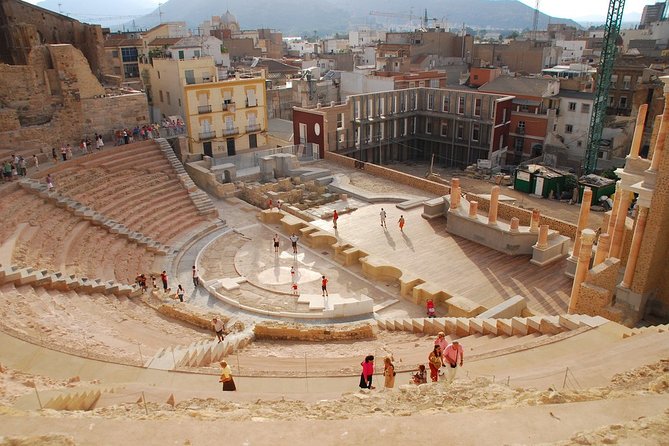
This theater was built between 5 and 1 BC, with an estimated capacity of about 7,000 spectators. It stayed in use until the third century, and then later buildings were constructed over parts of it. In 1988, it was exhumed—brought back to the surface—and that discovery is part of why the site is so gripping.
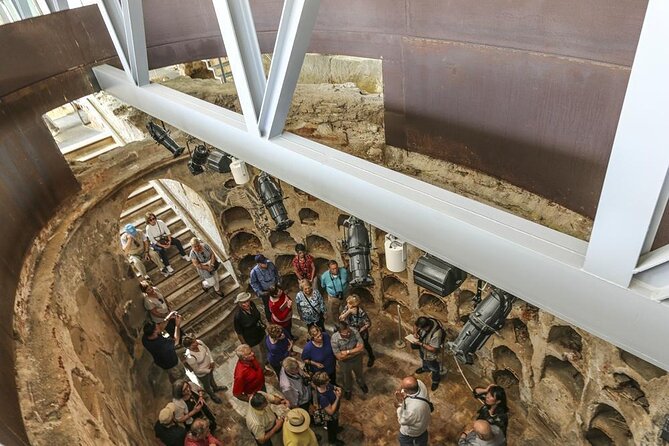
The theater was carved into rock and is described as one of the largest Roman theaters in Roman Hispania. After the excavation, the story didn’t end with stones and steps. The Roman Theater Museum, designed by architect Rafael Moneo, brings you inside the monument and offers the theater a new “last great hall” function as a museum space.
What you should plan for:
- 40 minutes at the theater and museum
- Admission is included (one of the most concrete inclusions in the whole tour)
This is where a guide really changes the experience. You’ll be able to connect the numbers (capacity, dates) with what you see in front of you—stage space, spectator layout, and why the location mattered.
Consistorial Palace and the old city rhythm—modernist style in the mix
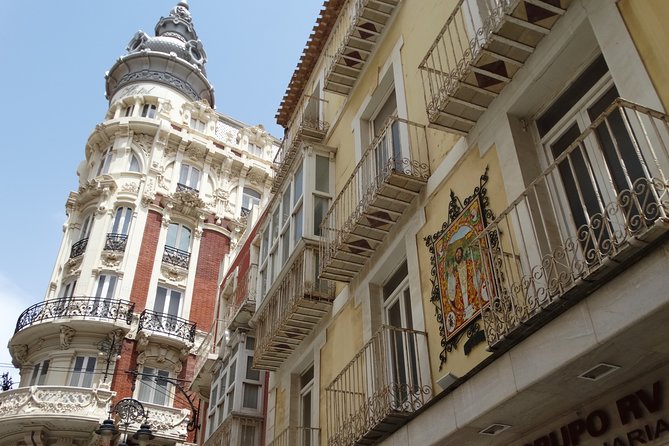
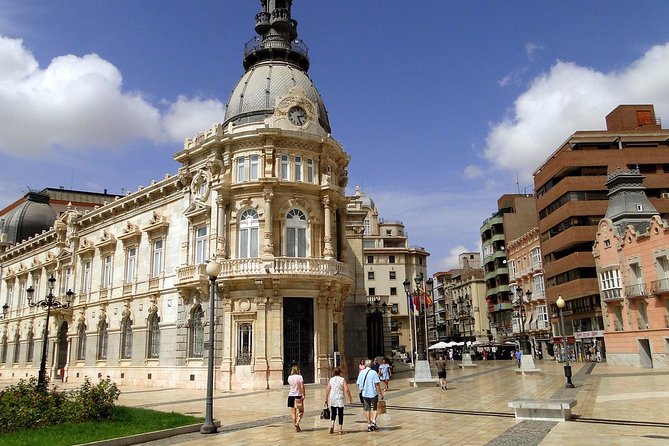
After the Roman stop, you get a change of tempo with the Consistorial Palace of Cartagena, also known as the city hall. The building is described as one of Cartagena’s modernist buildings, built between 1900 and 1907.
The details are specific and worth noticing:
- It’s a triangular building
- The façade is white marble
- Zinc domes stand out on the roof
And then you get the “why it matters” part: the exterior is repeatedly decorated with city emblems, including the castle of the Conception and the coat of arms. There’s also a mural crown awarded by Roman general Scipio Africanus when he took the city of Carthago Nova.
That last piece is especially handy. It ties the Roman past you just learned to a modern building’s identity—showing how Cartagena chose to remember itself.
This stop is also a nice break in the tour’s walk intensity. The article notes it as a key modernist structure, and it naturally works as a photo-and-explanation stop before the next archaeological site.
Stop 4: Cerro del Molinete—Roman forum traces near today’s streets
Next is Cerro del Molinete Archaeological Park, tied to the ancient city of Carthago Nova. The big idea here: this was one of the most splendid Roman cities in the empire, and it wasn’t just ruins in a field. It was a fully organized urban center.
The route description points to something very practical: parts of the Roman forum sat near today’s San Francisco square and were partially excavated. That’s the sort of detail that makes you look at the modern city differently—you start spotting how today’s street plan could sit over older foundations.
The forum area has been linked to monuments like:
- A temple dedicated to the Capitoline triad: Jupiter, Juno, Minerva
- The augusteum
- The curia (seat of government)
- Baths and palestra from the low imperial period
- A temple of Isis
This is where a guide pays off again. Without explanation, forum remains can feel like “stone and labels.” With context, you can imagine how public life moved through that space.
Cost-wise, this stop is free in the description, and it’s 40 minutes. That makes it one of the best budget-friendly components of the route.
Stop 5: Punic Wall and the Punic Wars story in stone
The final major historical anchor is the Punic Wall. This site connects Cartagena to the Punic Wars—the struggle between Carthaginians and Romans.
You’ll learn about Qart Hadast, a city founded by General Asdrubal in 229 BC, and you’ll see the wall, one of the few Carthaginian remains found in Spain. That’s a powerful contrast: you go from Roman theater and forum structures to a survival reminder of an earlier Mediterranean power.
There’s also an extra layer here: a burial crypt of the hermitage of San Jose, built in the 16th and 17th centuries. Its walls are described as having a specific “Dances of Death” pictorial program—something your guide can help you interpret as part of local religious and cultural storytelling.
Time is short for this stop—listed at 15 minutes—and the note says admission ticket is not included. So if you’re expecting to spend more time here, or you’re sensitive to extra ticket costs, keep that in mind.
What makes the guiding style matter: David, George, Rosel, and Gema
A big part of the quality signal comes from the guide experience. Past tours have highlighted guides with different strengths, but a shared theme: they connect the story to the city in a human way.
- David: blended history with current events and shared practical local recommendations—one highlight was his advice on the best gelato in Cartagena. That may sound small, but it’s the kind of local touch that keeps the tour feeling alive.
- George: praised for being very knowledgeable and for loving his city—exactly the kind of attitude that turns explanations into something you want to keep listening to.
- Rosel: strongly praised for adjusting to walking ability and asking if guests wanted breaks. That’s not just kindness. It’s smart tour leadership.
- Gema: paired the historical sites with archaeology-focused explanation, and her welcoming, fun personality helped make the route feel both educational and relaxed.
You can’t control which guide you’ll get, but you can control how you prepare. If you want explanations tailored to you, tell your guide what you’re into—Roman architecture, Punic-era stories, or simply learning how Cartagena layers different empires into one town.
Logistics you should plan for: walking pace, tickets, and comfort
This is a walking tour, even with a pickup. You’ll be moving between stops in the old city area, and at least one stop involves an elevator to a viewpoint plus possible stair situations around the sites.
The simplest way to make this tour smoother:
- Wear comfortable shoes with grip for uneven old-stone sidewalks
- Bring water, since food and drinks are not included
- Use the guide’s flexibility: if you need breaks, say it early
Also, not all admissions are included. The Roman Theater museum is covered, but other stops may require additional payment depending on day-of requirements—especially at the Castle of the Conception and Punic Wall.
If you’re booking for a hot afternoon, consider that the tour includes outdoor components and viewpoints. Morning departures often feel easier on energy, but afternoon can work if you pace yourself and take the offered breaks.
Who this tour is best for
I’d steer you toward this private guided walk if:
- You want the “why” behind the sites, not just a checklist of buildings
- You’re okay paying for private attention and included entry to the Roman Theater
- You want both Roman and pre-Roman context in a single half-day route
- You like learning with someone who can adapt to your physical pace
It’s also a good pick for first-time Cartagena visitors who want to get oriented fast—especially because the route connects distinct eras: sea history, medieval viewpoint architecture, Roman performance spaces, a modernist city hall, Roman forum traces, and a Punic wall.
If you’re in a hurry and only want quick photos, you’ll likely feel the price more than the benefit. This tour is built for meaning.
Should you book this Cartagena private walking tour?
Yes—if you value guided context and you’re excited about Cartagena’s layered past.
Book it if:
- You want private time with an official guide
- You care about the Roman Theater and Museum enough to make sure entry is handled
- You’re attracted to the mix of Roman, Punic, and medieval sites rather than one era only
Skip it or look for a different option if:
- You’re trying to keep total spending low on top of the listed price (since not every stop’s admission is included)
- You don’t want walking, viewpoints, or stairs at all
My practical bottom line: this tour pays off when you show up ready to ask questions and walk a bit. The structure keeps the day moving, and the best part is that it’s not just sights—it’s the connections between them, explained in a way that makes Cartagena feel like one coherent place instead of separate landmarks.
FAQ
Is this tour private?
Yes. It’s a private tour/activity, and only your group participates.
How long is the tour?
It lasts about 4 hours.
What language is the tour offered in?
The tour is offered in English.
Where does the tour start?
You receive pickup from a centrally located hotel.
Does the tour include entrance fees?
It includes the entrance fee to the Roman Theater and its museum. Other entrance fees are not included.
Are there different departure times?
Yes. You can choose from morning and afternoon departures.
Are tickets included for every stop?
No. Museo Naval and Cerro del Molinete are described as free-entry, while the Castle of the Conception and Punic Wall list admission tickets as not included.
Is food and drink included?
No. Food and drinks are not included.
Will I receive a confirmation after booking?
Confirmation is received at the time of booking.
Can I cancel for a refund?
Yes. Free cancellation is available up to 24 hours in advance for a full refund.
More Walled City and Old Town Walks in Cartagena
More Tour Reviews in Cartagena



Not quite it? Here is more to do around Cartagena, freshly reviewed












Walled City & Old Town Walks, compared.
 ★ 4.9Historic Center and Getsemaní Shared Walking TourFrom $122,716 reviews
 ★ 3.9City Sightseeing Hop-On Hop-Off Bus Tour & ExtrasFrom $23681 reviews
 ★ 4.0Panoramic City Tour, Monuments, Walls, CastleFrom $15636 reviews
 ★ 4.2BILINGUAL CITYTOUR + SAN FELIPE CASTLE & Old cityFrom $29387 reviews
 ★ 4.5Walled City and Getsemani Shared Walking TourFrom $16352 reviews
 ★ 4.0City Tour Hop On Hop Off – Bus Turistico de 2 pisos147 reviews
 ★ 5.0Shore Excursion PRIVATE City tourFrom $163121 reviews
 ★ 4.8Walled City & Getsemani Private TourFrom $69107 reviews
Browse the lists this tour appears in