
Reviewed · WALLED CITY & OLD TOWN WALKS
City Tour in Chiva through the City of Cartagena
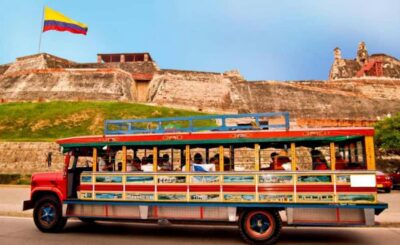
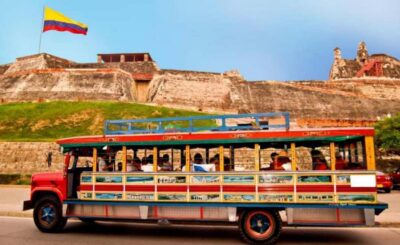
Cartagena’s history rides on an open-air chiva. This 4-hour tour blends iconic waterfront stops with a real-deal fort visit, plus a short walk through the UNESCO walled city. I love how the Fort San Felipe de Barajas includes entry and a guided visit, and I also like the goofy-fun chiva ride that makes photo stops feel easy. One thing to plan for: the chiva can run hot, and some groups report no AC or fans.
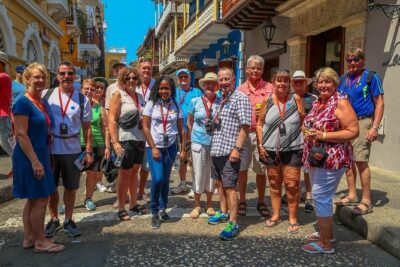
You get a certified guide for the full route, and the group stays fairly small (up to 30). That matters, because it keeps the timing workable through Cartagena’s hills and busy streets, and it helps when your guide is explaining the stories behind each stop. I especially like the mix of viewpoints plus history, so the day doesn’t feel like one long museum lecture.
At $35 per person, you’re paying for structure and transportation, not just sightseeing. The fort entrance is included, while other key stops like the bay views and city monuments are free—so the value is best if you want both the coastal scenery and the San Felipe fort without hassle. Bring a hat and shoes you can walk in, because you’ll do some street-level time inside the old walls.
In This Review
- Key things to know before you go
- The Chiva Ride: Fun Transport With Real-World Comfort Limits
- Where the Tour Starts: Independence Park, Clock Tower Area, and the Pegasus Pier
- Bahía Stop: Cartagena’s Sun-Sea Gateway to the Americas
- Letters of Cartagena: A Recycled-Material Photo Moment
- Monument to the Old Shoes: Poem, Pride, and Street-Level Meaning
- Fort San Felipe de Barajas: The Colonial Powerhouse on San Lázaro Hill
- India Catalina Monument: A Legendary Thread Through Cartagena’s Roots
- Centro Histórico Inside the UNESCO Walled City: Short Walk, Big Payoff
- Torre del Reloj (Clock Tower): The Walled City’s Main Gateway
- Price and Value: What $35 Covers (and Why It Feels Fair)
- Guides Matter: English Translation, Pace, and That Extra Care
- What Can Go Wrong: Heat, Crowding, Audio, and Shopping Stops
- Who This Tour Fits Best (and Who Might Skip It)
- Should You Book This Chiva City Tour?
- FAQ
- How long is the Cartagena City Tour in the chiva?
- What does the tour cost?
- How many people are in a group?
- What’s included in the price?
- Is the Fort San Felipe de Barajas entrance included with a guided visit?
- Are tickets needed for the bay, Old Shoes, and the Clock Tower?
- Is bottled water or soda included?
- Is service for people with medical or special needs available?
- Is there air conditioning on the chiva bus?
- Are there shop stops during the tour?
Key things to know before you go
- Fort San Felipe de Barajas entry included: You get a guided tour time inside this 1657 colonial fortress on San Lázaro hill.
- Bahía views with the walls as a backdrop: Quick but good photo angles and a sense of why Cartagena mattered for trade.
- Letters of Cartagena + Old Shoes monument: Two photo stops with clear meaning, including the recycled-material Letters sign.
- UNESCO Walled City walking block: A short, focused stroll in the historic center with churches, convents, squares, and colonial buildings.
- Chiva ride is fun, but not a comfort coach: Expect heat, and yes, there’s a small ladder step to board.
- Small group cap (max 30): Helps timing and makes guide attention more realistic across the route.
The Chiva Ride: Fun Transport With Real-World Comfort Limits
The chiva bus is part of what makes this tour feel like Cartagena, not just a checklist. You’ll ride around by bus, then switch into short walking time inside the walled center, so you’re not stuck trudging everywhere.
Do expect “open-air” conditions. Reviews mention extreme heat and point out that there’s often no AC or fans, so dress for sun and bring what you need—even though water and soda are not included. Also note the practical boarding detail: some people climb up about three rungs of a ladder to get into the chiva, which can be a deal-breaker if mobility is an issue.
On the plus side, the chiva’s height and movement can make it easier to see key landmarks quickly. It’s also a good way to get your bearings fast, especially if you’re new to the walled city layout and want to understand where things sit relative to the bay.
We have more walks through the walled city and old town of Cartagena


Where the Tour Starts: Independence Park, Clock Tower Area, and the Pegasus Pier
You start near the area tied to Cartagena’s emancipation story, right in front of the Clock Tower zone, the Pegasos Pier, and Independence Centennial Park. This is a smart kickoff because it sets the theme: Cartagena’s past isn’t just colonial architecture—it’s also about power, resistance, and identity.
From there, you pass the Convention Center and head toward the bay area. This early stretch helps you connect the dots: why the waterfront matters, why the walls mattered, and why forts and gateways were built where they were.
If you’re the type who likes photos early, you’ll appreciate having a sequence that doesn’t dump all the pictures at the very end. The tour keeps pulling you to visual landmarks, not just street corners.
Bahía Stop: Cartagena’s Sun-Sea Gateway to the Americas
The bay is the “why” behind Cartagena. You get a stop at Bahía, positioned as the commercial gateway to America thanks to its strategic location and natural conditions. Even with a brief time window (about 15 minutes), you can still get that panoramic sense of the city walls and the harbor’s scale.
It’s also a good place to pause and plan your next shots. Cartagena’s old city is packed with viewpoints, but the bay stop gives you a wider context so your photos look like they belong to a bigger story.
One practical note: because this area is exposed and you’re out in the sun, it’s smart to use this moment for quick shade breaks if you need them. Water isn’t included, so if you tend to get dehydrated easily, bring it ahead of time.
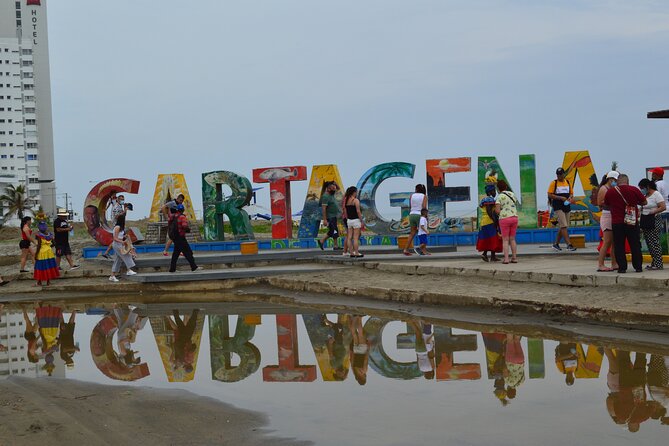
Letters of Cartagena: A Recycled-Material Photo Moment
Next comes a brief stop for the Letters of Cartagena monument. This sign is made with recycled material and stands roughly 2.40 to 2.60 meters tall, which means it’s tall enough for clear photos even if others are standing nearby.
This stop is short, but it’s worth using well. If you want photos with the Letters as your foreground and the surrounding skyline behind you, aim for an angle that shows depth, not just a flat front-on shot. Also, because it’s near other landmarks, you can usually get photos without feeling like you’re waiting in a long line.
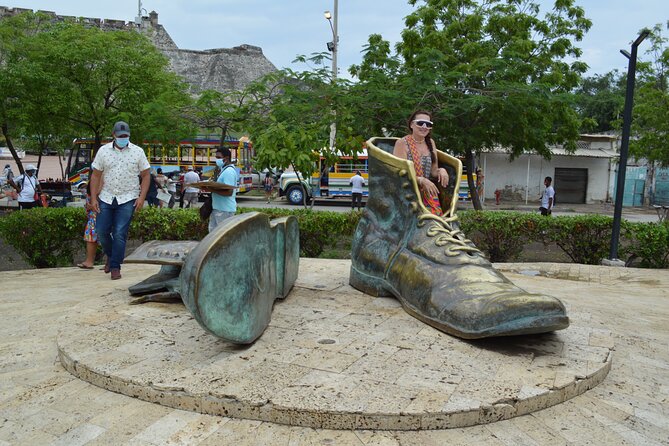
Monument to the Old Shoes: Poem, Pride, and Street-Level Meaning
Then you roll to the Monument to the Old Shoes. It’s connected to one of Cartagena’s great poets, and the sculpture is described as having a kind of personality—reflecting love for the humble but proud origins it represents.
This stop is about 20 minutes, which is enough to take photos and actually read the vibe. It’s a reminder that Cartagena’s landmarks aren’t only military structures and grand churches. People also remember the everyday details that shaped identity.
If you like your tours to add texture—small symbols with human meaning—this is a great one. It also tends to be less “tour bus chaos” than some of the biggest must-see photo walls, so you can take your time.
The night is young. See more salsa, chivas and nightlife in Cartagena





Fort San Felipe de Barajas: The Colonial Powerhouse on San Lázaro Hill
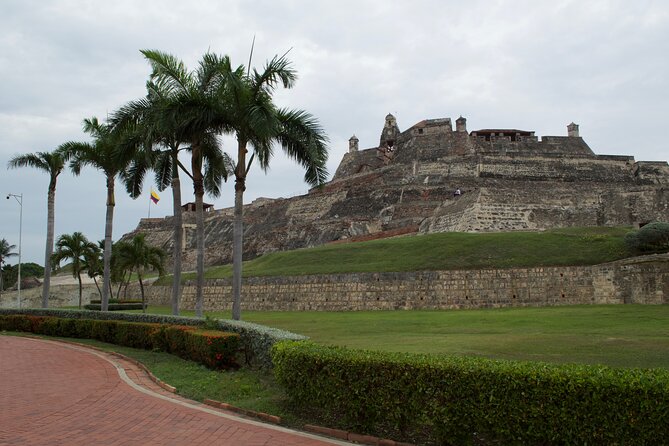
Now the main event: Castillo de San Felipe de Barajas. The fort was built in 1657 in the Spanish colonial era and sits on a hill called San Lázaro. It’s often described as one of Colombia’s seven wonders, and walking into it with a guide is the best way to understand why.
You get the entrance included, plus a guided tour time (about 1 hour 30 minutes). That guide time is key, because a fortress can be confusing if you just stroll and look. With a guide, you’ll learn how the structure links to defense strategy and to Cartagena’s history as a target for attacks.
You also hear the dramatic timeline: the fort faced constant assaults by the English and French, and the French commander Baron de Pointis took the castle in the mid-1697 period. Even if you’ve heard the names before, hearing it with the fort’s physical layout makes it feel less like trivia and more like a story you can picture.
Wear real walking shoes. Parts of the fort are uphill and stair-heavy, and this is not the moment to wear slippery sandals. If you’re sensitive to heat, you may want to pace yourself at the start and save your biggest photo shots for times when you’re not climbing.
India Catalina Monument: A Legendary Thread Through Cartagena’s Roots
After the fort, the tour passes by the Monument to India Catalina. It’s tied to a sculptural work by Eladio Gil, and the story centers on Catalina as a warrior figure born in nearby Galerazamba.
The legend says she was sold as a slave in Santo Domingo, and then Pedro de Heredia brought her to Cartagena in 1533 as an interpreter. She becomes a key character in the story of miscegenation in Cartagena de Indias territories—so this stop works well as a bridge from Spanish-era conflict to human cultural mixing.
This is more of a look-and-absorb moment than a long stop. But it’s an important one, because it adds depth to your understanding of Cartagena beyond forts and trade routes.
Centro Histórico Inside the UNESCO Walled City: Short Walk, Big Payoff
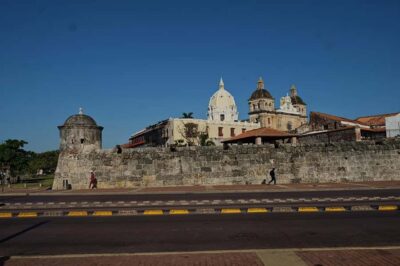
The tour ends with a walking tour in the Centro Histórico, the old part of the city. This area is recognized as UNESCO Historical and Cultural Heritage of Humanity since 1984, and it’s exactly what you want on a first visit: churches, convents, monasteries, monasteries-in-the-quiet-corners, squares, colonial houses, and palace-like buildings.
You’re not here for hours, but the pacing is good. About 30 minutes of walking means you get key streets and spaces without burning your whole day. You’ll also see the shopping side of the walled city, including places with higher-end brands, so if you like to window-shop, this part won’t feel wasted.
One practical tip: start paying attention to the street shapes and the way buildings cluster. Inside the walls, Cartagena can feel like it has its own logic. This walking segment helps you understand that logic without requiring you to map your way through.
Torre del Reloj (Clock Tower): The Walled City’s Main Gateway
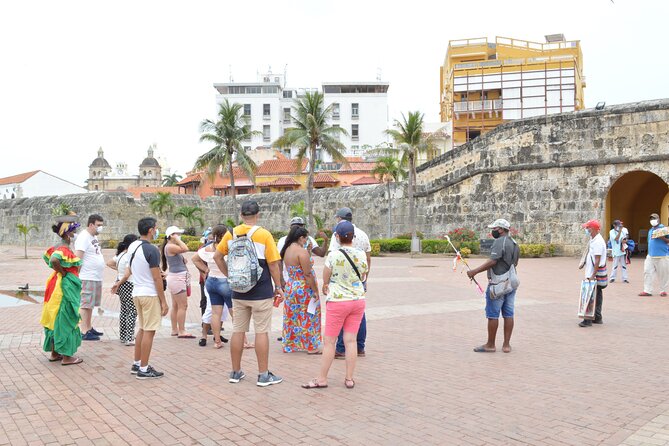
You wrap up at the Torre del Reloj—also known as the Puerta del Reloj or Clock Tower. The area was originally called Boca del Puente and served as a main entrance to the walled city.
A lot of people love this stop because it includes a little layer-cake of history. Side arches were used as a chapel and an armament room, and today those areas function as walkways open to the public. Then in 1888, the republic-style tower with the clock was added, giving it that signature look you see on postcards.
This stop is brief (about 10 minutes), so treat it as a final photo moment and a “close the loop” point. You started near the clock tower area, and now you finish right back at that symbolic gateway.
Price and Value: What $35 Covers (and Why It Feels Fair)
At $35 per person, the value comes from what’s included, not from what’s missing. You get:
- Chiva bus transportation (the fun ride part)
- Private transportation
- A certified guide
- Fort San Felipe de Barajas entrance with a guided tour
- Admission included for the fort, while the other major stops are free
That fort entrance inclusion is the real anchor. If you’ve ever priced out fortress admissions and guided time separately, you’ll recognize why this is a decent deal—especially since the route also layers in multiple free photo stops and the UNESCO walking portion.
The schedule also matters. At about 4 hours, it’s long enough to feel like a full city orientation, but not so long that you’ll run out of energy before the best views and final walk.
Small group size helps too. With a maximum of 30 travelers, you’re less likely to feel completely lost in the noise, even when the guide is explaining stories and history.
Guides Matter: English Translation, Pace, and That Extra Care
One of the most praised parts of this experience is the guide quality. In the reviews, names like Caesar, Herman, Freddie, and Martin show up with consistent praise for clarity and attention—especially for English speakers.
That’s not just comfort. It changes how much you understand when you’re standing in front of the fort or the monuments. You don’t want to spend a big chunk of time “reading the air,” wondering what the guide is saying.
Do keep one caution in mind: English support can vary by group and guide. Some groups report smooth translation and guide patience, while at least one account mentions a guide who did not speak English. If you need English specifically, I’d plan to ask ahead and confirm language support.
Also, pay attention to pacing. Some reviews highlight that guides keep people on schedule even in larger groups, and that means you get your fort time and still end with the historic center walk.
What Can Go Wrong: Heat, Crowding, Audio, and Shopping Stops
This tour is popular for a reason, but it has a few practical friction points you should know before you go.
Heat is the big one. Multiple accounts say it gets very hot on the chiva, with no AC or fans. Dress for sun, bring your own water, and don’t plan to wear anything you can’t reapply sunscreen on.
Sound can be hit-or-miss. One account notes the sound quality isn’t always great, and explanations during the walking part can get lost. If audio clarity is important to you, sit where you can hear and don’t hesitate to ask for clarity during stops.
Crowding happens. There are mentions of being overly crowded on the chiva. That’s tied to group size and vehicle limits, so if you’re sensitive to tight spaces, arrive ready to be patient.
There may be a shop stop. Some accounts describe a jewelry or emerald store pitch near the walking portion. Another account mentions stopping at a chocolate factory area to try a chocolate beer. This isn’t the core of the main monuments and fort, so treat it as a possible extra and decide in advance how you feel about sales pitches. You can politely decline without turning it into a dramatic scene.
Vendors are part of Cartagena. Even if the tour itself isn’t about shopping, you’ll likely see street sellers around key photo spots and along the way. That’s normal. It helps to keep your camera ready and your expectations realistic.
Who This Tour Fits Best (and Who Might Skip It)
You’ll probably love this tour if you want a structured introduction to Cartagena without building a route yourself. It’s ideal for:
- First-time visitors who want key sights in one day
- History fans who care about why the fort mattered
- People who like photo stops with clear landmarks (Letters, Old Shoes, Clock Tower)
- Couples and families who want a short walking finish inside the UNESCO walled city
You might want to think twice if:
- You struggle with heat and prefer fully climate-controlled tours
- You need step-free access, since boarding the chiva can involve a ladder step
- You need reliable English translation every minute, because guide support can vary by group
Should You Book This Chiva City Tour?
Yes, if your goal is a high-value sampler: bay viewpoints, a major fortress with entry and guidance, plus a walk in the UNESCO old city, all in one smooth half-day plan. The $35 price works best when you care about the fort experience, not just quick photos.
I’d especially book this if you want the kind of guide effort that shows up in the reviews: names like Caesar, Herman, Freddie, and Martin are praised for making the stories stick and for being attentive to English speakers. That attention can turn a site-visit into real understanding.
If you hate heat, don’t love shopping pitches, or need guaranteed step-free access and strong English support, you’ll be happier choosing a different style of tour. But if you’re flexible, bring sun protection, and go in ready for an energetic open-air ride, this is a solid way to get Cartagena’s big themes into your first 4 hours.
FAQ
How long is the Cartagena City Tour in the chiva?
The tour lasts about 4 hours.
What does the tour cost?
It costs $35.00 per person.
How many people are in a group?
The tour has a maximum of 30 travelers.
What’s included in the price?
Included are private transportation, transportation in the chiva bus, a tour guide, and entrance to the Castillo de San Felipe de Barajas.
Is the Fort San Felipe de Barajas entrance included with a guided visit?
Yes. Entrance to the fort is included, with a guided tour inside the castle.
Are tickets needed for the bay, Old Shoes, and the Clock Tower?
No. The bay, Old Shoes monument, and the Clock Tower are listed as admission free.
Is bottled water or soda included?
No. Bottled water and soda are not included.
Is service for people with medical or special needs available?
Service animals are allowed. One review also mentions staff helping in a medical emergency, but the tour data does not list additional medical services beyond that.
Is there air conditioning on the chiva bus?
Reviews mention the chiva does not have air conditioning and there may be no fans, so expect warm conditions.
Are there shop stops during the tour?
Some accounts describe a shopping stop, such as a jewelry or emerald store pitch. Another account mentions a chocolate factory tasting, so you should be ready for possible sales-focused stops.
More Walled City and Old Town Walks in Cartagena
More Tour Reviews in Cartagena



Not quite it? Here is more to do around Cartagena, freshly reviewed











Walled City & Old Town Walks, compared.
 ★ 4.9Historic Center and Getsemaní Shared Walking TourFrom $122,716 reviews
 ★ 3.9City Sightseeing Hop-On Hop-Off Bus Tour & ExtrasFrom $23681 reviews
 ★ 4.0Panoramic City Tour, Monuments, Walls, CastleFrom $15636 reviews
 ★ 4.2BILINGUAL CITYTOUR + SAN FELIPE CASTLE & Old cityFrom $29387 reviews
 ★ 4.5Walled City and Getsemani Shared Walking TourFrom $16352 reviews
 ★ 4.0City Tour Hop On Hop Off – Bus Turistico de 2 pisos147 reviews
 ★ 5.0Shore Excursion PRIVATE City tourFrom $163121 reviews
 ★ 4.8Walled City & Getsemani Private TourFrom $69107 reviews
Browse the lists this tour appears in